

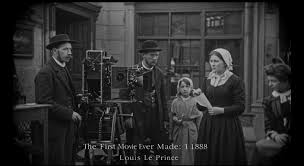
The story of the first movie ever filmed is one of curiosity, invention, and the quiet beginnings of a medium that would one day captivate the world. Long before Hollywood, blockbuster budgets, and streaming platforms, cinema began with a simple experiment in capturing motion. People have long wondered: what was the first movie ever filmed, and who was behind it? Exploring the earliest days of filmmaking reveals not just a technological breakthrough, but a glimpse into the very origins of storytelling through motion pictures.
What Was the First Movie Ever Filmed?
When we think about cinema today, we imagine elaborate narratives, special effects, and immersive storytelling. However, the first movie ever filmed was far from this. Known as Roundhay Garden Scene, this short film was recorded in 1888 and is widely recognized as the earliest surviving motion picture. Filmed by Louis Le Prince, often called the father of cinema, the film captures just a few seconds of everyday life—people walking in a garden, moving about casually, and sharing moments in a relaxed setting.
This tiny fragment of history, lasting only three seconds, may seem insignificant by today’s standards, but it holds monumental importance. It represents the first successful attempt at creating a first cinematic film, setting the foundation for all future motion pictures. In a time when photography was still developing, capturing movement was revolutionary. The first motion picture ever filmed was not just a technological achievement; it was the birth of a completely new form of art.
The Earliest Days of Cinema
The birth of cinema didn’t happen overnight. Early inventors experimented with capturing motion, and techniques evolved gradually. Pioneers like Thomas Edison in the United States and the Lumière brothers in France made significant contributions, but it was Louis Le Prince who first successfully recorded moving images on film.
In the late 19th century, cameras were rudimentary, and film reels were short and fragile. Innovators had to figure out not just how to record motion, but also how to project it in a way that could be seen by an audience. This period, often referred to as pre-Hollywood cinema, was marked by experimentation. Early films were brief, silent, and primarily documentaries of everyday life.
Some early filmmaking techniques involved using multiple cameras to capture motion or recording subjects moving in front of static backgrounds. These first attempts laid the groundwork for the silent film era beginnings, long before sound or color became part of the cinematic experience. Understanding these origins helps us appreciate how far movies have come and why the first few films, though simple, were groundbreaking.
Louis Le Prince and the First Motion Picture
Louis Le Prince is a name that often surprises people when discussing the first movie ever filmed. While Edison and the Lumières are household names today, Le Prince quietly created what many historians consider the first film in cinema history.
The Roundhay Garden Scene was filmed at Oakwood Grange in Leeds, England, on October 14, 1888. The cast included Le Prince’s family members—Adolphe Le Prince, Sarah Whitley, Joseph Whitley, and Annie Hartley—captured in natural motion as they walked and interacted in the garden. Though the clip is short, it represents a monumental step: the earliest recorded motion picture, showing life in motion for the very first time.
Le Prince’s camera, an early experimental device, recorded the action on film, proving that movement could be captured and replayed. This achievement is why he is often regarded as one of the early film pioneers, a crucial figure in the invention of motion pictures. Without his work, the first movie recorded might have been delayed, altering the timeline of cinematic history.
Roundhay Garden Scene – A Glimpse Into History
The Roundhay Garden Scene is remarkable not only because of its age but also because of what it tells us about the earliest days of filmmaking. The footage shows people walking casually in a garden, a dog strolling by, and even subtle gestures that give the scene life. These few seconds demonstrate how visual storytelling could emerge from simple, everyday actions.
This short clip also marked the beginning of the first public film screening, though initially, it was more of a personal demonstration than a public spectacle. Unlike modern movies, which often tell intricate stories, this earliest short film captured ordinary moments, emphasizing the novelty of motion itself. It is fascinating to consider that this earliest movie ever made laid the foundation for the evolution of cinema, showing that even a few seconds of motion could captivate viewers.
Preserving such early films has always been a challenge. Film reels deteriorate quickly, and many of the first experiments have been lost. That makes surviving footage like Roundhay Garden Scene all the more important, offering a tangible link to the first film ever made and the very beginnings of the cinematic art form.
Comparing the First Movies Ever Made
While Roundhay Garden Scene is widely credited as the first movie ever filmed, it was not the only early experiment in capturing motion. Other notable films include Workers Leaving the Lumière Factory and Horse in Motion by Eadweard Muybridge. These films contributed to the early understanding of motion capture and the potential of moving images.
- Workers Leaving the Lumière Factory: Filmed in 1895 by the Lumière brothers, this short clip shows factory workers exiting a building, offering another glimpse into everyday life captured on film.
- Horse in Motion: Muybridge’s photographic experiments in the 1870s used sequential photos to capture a horse’s gait, a precursor to motion pictures.
- Man Walking Around a Corner: Another brief experiment demonstrating motion through sequential images.
The debates about which was the first movie ever made often hinge on definitions. Should a film be a few seconds or several minutes? Does it need to be publicly screened? While Roundhay Garden Scene holds the title for the earliest surviving motion picture, these other films illustrate how multiple inventors were experimenting simultaneously, shaping the first cinematic films in different ways.
Timeline of the Earliest Films
Understanding the timeline of the earliest films helps contextualize the first movie recorded within broader history:
- 1888: Roundhay Garden Scene is filmed by Louis Le Prince in Leeds, England.
- 1891–1895: Thomas Edison experiments with the kinetoscope, leading to early motion pictures in the United States.
- 1895: Lumière brothers hold the first public screening of their films, including Workers Leaving the Lumière Factory.
During this period, early film technology evolved rapidly. Cameras became more reliable, film reels longer, and projectors more effective. These developments paved the way for the first film screenings and the eventual rise of public cinema.
The evolution of cinema can be traced directly to these experiments. Simple, brief recordings like Roundhay Garden Scene demonstrated the possibilities of moving images, inspiring inventors and filmmakers worldwide to explore the development of motion pictures as an art form.
Educational Insights Into the First Movie
The first movie ever filmed wasn’t just a technological experiment; it also provides insights into storytelling and the mechanics of early cinema. For instance, the clip is only a few seconds long, so one might wonder how long was the first movie. Its simplicity shows that early filmmakers were exploring what movies looked like in the beginning, focusing on movement rather than narrative.
Early films also sparked curiosity about the first full film. While Roundhay Garden Scene is only a fragment, it set the stage for longer films and more complex storytelling. The difference between film and movie history becomes clearer when we examine these early experiments—they weren’t yet movies in the narrative sense but were first motion pictures capturing reality in motion.
Famous Early Films and Their Legacy
Beyond Roundhay Garden Scene, other early films played pivotal roles in shaping the cinematic world.
- Workers Leaving the Lumière Factory: Showed the potential of motion pictures to capture everyday life.
- Man Walking Around a Corner: Demonstrated sequential motion.
- Horse in Motion: Highlighted how scientific observation could inspire cinematic techniques.
These early works influenced later inventors like Edison and the Lumière brothers, as well as future directors experimenting with narrative and artistic filmmaking. They show the roots of the first silent film ever made, the earliest short film, and even the beginnings of what would become the standard for first black and white movies.
Through these films, it becomes clear that the first movie ever filmed wasn’t just a historical curiosity—it was the start of a global cultural phenomenon that would grow into the powerful medium we know today.
Is Wizard of Oz the first color movie?
While many people associate color movies with the early days of cinema, the 1939 film The Wizard of Oz was not the first color movie ever made. It was, however, one of the first major Hollywood films to use Technicolor extensively, making it iconic for its vibrant imagery.
Early experiments with color in films date back to the late 1800s and early 1900s. Filmmakers often hand-painted individual frames or used tinting techniques to add color to black-and-white footage. These early methods were labor-intensive and limited, but they paved the way for full-color productions like The Wizard of Oz. Understanding this distinction helps clarify the evolution from first black and white movie to full-color storytelling.
What was the first full film?
The term “first full film” can be a bit tricky because it depends on how we define a “film.” If we consider length and narrative structure, the 1903 film The Great Train Robbery by Edwin S. Porter is often cited as the first full film with a complete story. Unlike Roundhay Garden Scene, which was just a few seconds of daily life, The Great Train Robbery featured multiple scenes, characters, and a cohesive plot.
This progression from short experimental clips to full narrative films demonstrates the rapid evolution of early filmmaking. It also underscores why the first movie ever filmed was so critical—it laid the groundwork for all subsequent cinematic storytelling, from silent films to feature-length movies.
Which movie was filmed first?
If we narrow the question to the first movie ever filmed, the answer is widely accepted to be Roundhay Garden Scene, recorded by Louis Le Prince in 1888. The film captures just a few seconds of family members walking in a garden, but it represents the earliest surviving motion picture ever made.
It’s worth noting that other early experiments existed, such as Eadweard Muybridge’s sequential photographs of a horse in motion or Thomas Edison’s kinetoscope experiments. However, these were either not continuous motion pictures or not publicly documented. In that sense, Roundhay Garden Scene holds the title for the earliest movie in history.
What movie is 51420 minutes?
A fascinating curiosity in film history is the movie Modern Times Forever (2011), which holds the record for the longest film ever made at 51,420 minutes—or over 35 days of continuous runtime. While this has little to do with the first movie ever filmed, it highlights how far cinema has come—from three-second experimental clips to epic, conceptual projects that push the boundaries of storytelling.
This extreme example also emphasizes the contrast between early short films like Roundhay Garden Scene and modern cinematic experimentation, showing the incredible evolution of cinema over more than a century.
Bringing It All Together
The journey from the first motion picture ever filmed to today’s blockbuster cinema is a story of invention, experimentation, and creativity. Films like Roundhay Garden Scene and Workers Leaving the Lumière Factory may seem simple, but they were the first steps in a revolution that would transform how we see the world.
Early films captured everyday life, explored motion, and experimented with storytelling, paving the way for longer narratives, color, sound, and eventually the diverse cinematic experiences we enjoy today. Understanding the first movie ever filmed is not just about identifying a single clip; it’s about appreciating the birth of an art form that continues to evolve and inspire.
