

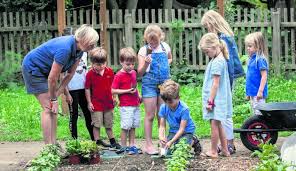
If you walk past some UK schools these days, you might notice something slightly unusual happening during lesson time. Instead of sitting at desks, students are outside poking around in the soil and arguing about whose turn it is to water the plants.
It might look like a messy way to spend a lesson, but schools have good reasons for doing it.
So, why are so many schools embracing gardening as part of their curriculum? Keep reading to find out.
Making Sustainability Stick
Telling a nine-year-old that ‘biodiversity is important’ will get you a polite nod and a glazed expression. The message lands somewhere, but it doesn’t stay there for long.
Lift the lid on a compost bin wriggling with worms, though, and suddenly the idea becomes a lot more interesting.
There’s a reason gardening works where other methods don’t; it makes abstract ideas seem more realistic.
When kids see waste from the canteen turn into compost, natural cycles stop being a vague concept and become something they’ve watched happen week by week.
When people experience something directly, it tends to stay with them far longer than anything they’ve only been told.
Building Healthier Eating Habits
Here’s a fun fact: a surprising number of children actually believe carrots grow on trees. It sounds almost unbelievable until you remember that, for many of them, food has only ever appeared neatly packaged on a supermarket shelf.
When students plant vegetables, water them, and then watch them slowly turn into something edible, food stops being a random object that appears on a plate. It becomes a process they understand, and one they’ve had a hand in.
That small change changes how children think about eating, too. Students who grow tomatoes tend to feel oddly proud of them, and that pride makes them far more willing to actually try one.
Schools that incorporate growing food into their programmes often report students showing more curiosity about nutrition and ingredients.
As it turns out, a few weeks in a garden can do what years of healthy eating campaigns sometimes can’t.
Reconnecting Students with Nature
Children today spend more time staring at screens than any generation before them. So, a lot of them have fewer chances to spend real time outdoors, and that gap shows up in ways people are starting to notice.
Researchers often talk about something called ‘nature connectedness.’ In plain terms, it just means feeling like the natural world has something to do with you personally.
Gardening builds that connection naturally. The moment a student has looked after a plant, watched it grow, and maybe even eaten something that came from it, the whole idea of nature stops feeling distant.
There’s another benefit, too. Gardening forces us to slow down. Insects don’t follow timetables, and nothing grows faster because someone asked it to. Spending time in that kind of space gives students a break from the constant buzz of notifications and deadlines.
Teaching Responsibility
Plants are wonderfully indifferent to excuses. They don’t care that it was raining, or that it was the last week of term, or that someone forgot. They need water, attention, and care, and if they don’t get it, they make that very clear.
This is, it turns out, an excellent teaching tool.
When students are given ownership of a bed of herbs or a row of lettuce, they quickly learn that their actions have consequences. A seedling that’s been watered consistently grows. One that’s been neglected doesn’t. There’s no getting around it.
And once that mindset takes hold, it rarely stays confined to gardening. Students begin to notice the link between actions and outcomes.
That’s exactly the kind of thinking sustainability education hopes to encourage, and a few rows of plants manage to teach it without saying very much at all.
Encouraging Teamwork
A school garden rarely works as a solo project. One student can’t run the whole thing, and even the most enthusiastic gardener will struggle to water, plant, weed, and harvest everything on their own. That’s part of what makes it such a good place to practise teamwork.
Because of this, students naturally start dividing the work. Along the way, they learn how to plan, share jobs, and occasionally sort out the small disagreements that pop up whenever people are working together.
The community side of things adds another layer. Many schools now bring in parents, local gardening groups, and volunteers who know things the school can’t necessarily provide.
For schools in the capital, specialist organisations focused on gardening London projects have also got involved, running sessions and sharing expertise.
When students see adults in their community caring about the same things they’re learning in class, the message lands differently. It stops feeling like a school project and starts feeling like something that actually matters.
Showing How Small Actions Can Help
One of the most valuable things a school garden teaches is perspective. It shows that what you do in a small patch of soil actually connects to something much larger.
When students compost a week’s worth of canteen waste or plant native wildflowers, they begin to see how everyday decisions shape the environment around them.
None of these actions will single-handedly reverse climate change, but they add up. And more importantly, they show students that they are capable of contributing to something meaningful right now, not just when they’re older.
Students who develop that belief don’t tend to leave it at the school gate. They go home and question why the household bins aren’t sorted properly. Eventually, they make different choices as consumers, citizens, and adults.
Conclusion
Instead of relying on apps or complicated programmes, schools are discovering that soil, sunlight, and a bit of patience can teach lessons that stick long after the school day ends.
If your school hasn’t started yet, it’s not too late to dig in. And if it has, you probably already know how much students get out of it. All things considered, it’s a pretty good return on a packet of seeds!
