

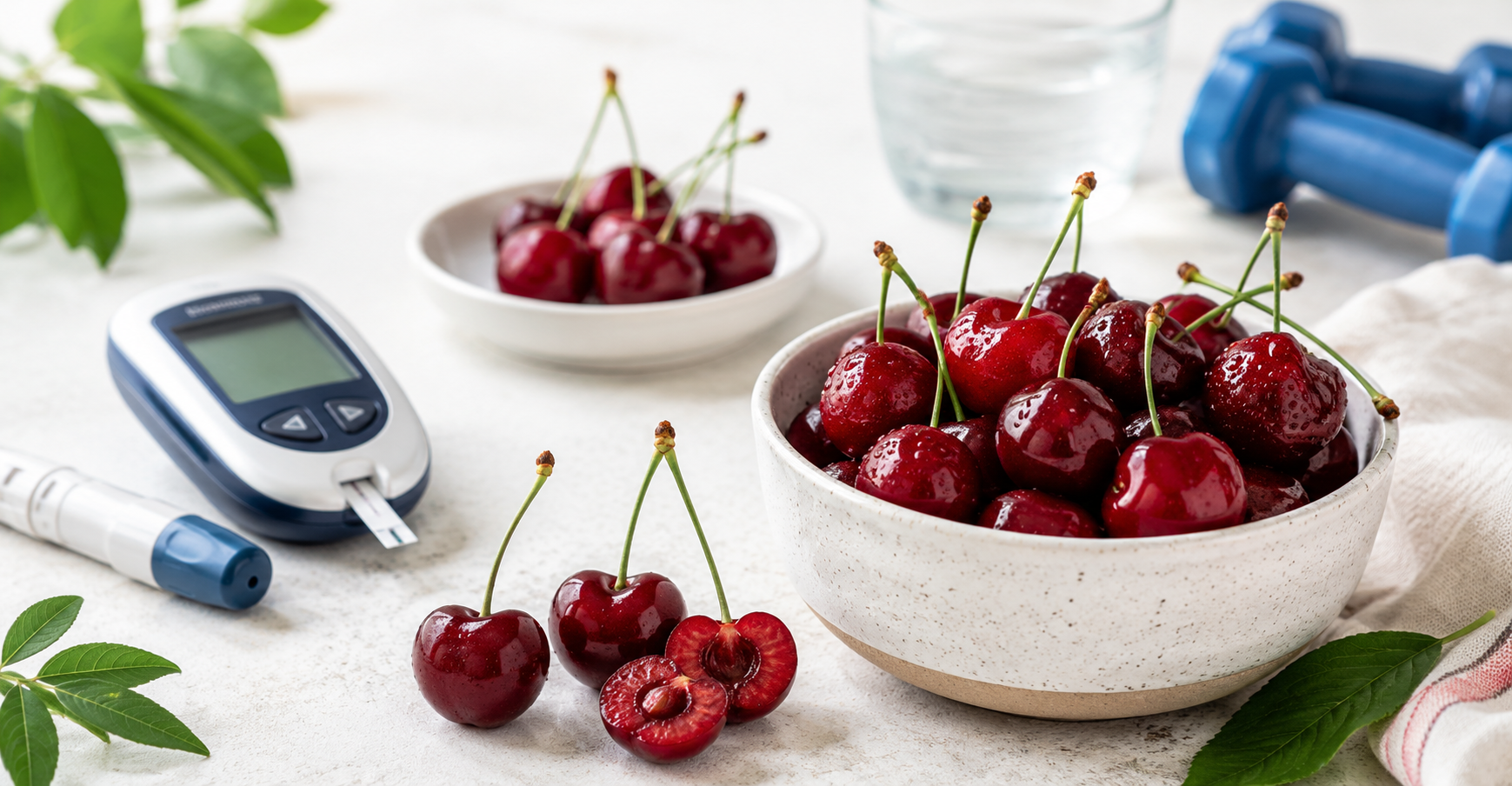
If you are asking is cherries good for diabetes, the better way to say it is: Are cherries good for diabetes? The answer is yes, cherries can fit into a diabetes-friendly diet, but portion size matters because cherries still contain natural sugar and carbohydrates.
Fresh cherries are not the same as candy, juice, or syrup-packed fruit. They come with fiber, vitamin C, potassium, polyphenols, and antioxidants, which makes them a better choice than many processed sweet snacks. But they can still raise blood sugar if you eat a large bowl without counting the carbs.
The American Diabetes Association says people with diabetes can eat fruit, but fruit contains carbohydrates, so portion size and carb counting still matter. It also notes that dried fruit is much more concentrated, with only 2 tablespoons of dried fruit such as dried cherries counting as about 15 grams of carbohydrate.
Quick Answer: Are Cherries Good for Diabetes?
Cherries can be good for diabetes when eaten in a controlled portion, especially fresh or frozen cherries with no added sugar. They may be a smart fruit choice because they offer fiber and plant compounds without the added sugar found in desserts, sweetened juices, or canned fruit in syrup.
A reasonable serving for many people is around ½ cup to ¾ cup of fresh cherries, or roughly 12 to 15 cherries, depending on size. That gives you the flavor and nutrients without turning a small snack into a high-carb meal.
The main rule is simple: fresh cherries are usually a better option than dried cherries, cherry juice, cherry pie filling, or canned cherries in heavy syrup.
How Cherries Affect Blood Sugar
Cherries contain natural sugars, mostly in the form of carbohydrates. That means they can raise blood glucose, but the rise depends on the amount eaten, the type of cherry, what you eat with them, and your personal glucose response.
A USDA-based nutrition listing shows that 1 cup of raw sweet cherries without pits contains about 97 calories, 24.7 grams of total carbohydrate, 3.2 grams of fiber, and 19.7 grams of total sugars.
That does not mean cherries are “bad.” It means they should be counted like other fruits. For diabetes, the issue is rarely one cherry or a small serving. The problem is eating a large amount without realizing how quickly the carbs add up.
Fresh Cherries vs Dried Cherries
Fresh cherries have more water and volume, so they are easier to portion. Dried cherries are much more concentrated. You can eat several tablespoons quickly and get a lot of sugar and carbs without feeling very full.
For diabetes, this difference matters:
Fresh cherries: better for portion control
Frozen unsweetened cherries: also a good option
Dried cherries: easy to overeat, often higher in carbs per bite
Canned cherries in syrup: usually not the best choice
Cherry juice: can raise blood sugar faster because it removes most of the chewing and fiber effect
The ADA specifically warns that dried fruit portions are small because the carbohydrates are concentrated.
Are Cherries Low Glycemic?
Many articles say cherries are a low glycemic fruit, but the full picture is more careful. Some cherry varieties and cherry products may test low, while others may test higher depending on ripeness, variety, processing, and serving size.
The University of Sydney’s Glycemic Index resource notes that older cherry GI values were based on early data and later testing of red ripe Australian cherries produced a higher GI value than the commonly repeated low number.
So instead of saying “cherries never spike blood sugar,” the more accurate advice is:
Cherries may have a gentler blood sugar effect than many sugary desserts, but they are still a carbohydrate-containing fruit and should be portioned.
Why Cherries May Be a Smart Sweet Snack
Cherries can help satisfy a sweet craving without reaching for cookies, candy, or sugary drinks. This is one reason they can work well in a diabetes meal plan.
They also contain anthocyanins, the natural pigments that give red and purple fruits their deep color. Research reviews have linked cherry consumption with effects on oxidative stress and inflammation, both of which are important areas of interest in metabolic health. A review on cherry health benefits reported that sweet and tart cherries may help reduce oxidative stress and inflammation markers, though results can vary by study and product type.
That does not mean cherries are a diabetes treatment. They are simply a nutrient-rich fruit that may fit well when eaten sensibly.
Best Serving Size for People With Diabetes
A good starting portion is:
½ cup fresh cherries for a smaller snack
¾ cup fresh cherries if it fits your carb target
1 cup fresh cherries only if you are counting the full carb amount into your meal plan
Because 1 cup of raw sweet cherries has about 24.7 grams of carbohydrates, half a cup would be roughly half that amount.
The best serving size depends on your blood sugar goals, medication, insulin use, activity level, and what else you are eating. Some people may handle cherries well. Others may see a stronger glucose rise. Checking your blood sugar before and after eating them can show your personal response.
How to Eat Cherries Without Spiking Blood Sugar
The easiest way to make cherries more diabetes-friendly is to pair them with protein, healthy fat, or fiber-rich foods. This can slow digestion and make the snack feel more satisfying.
Good pairings include:
Cherries with Greek yogurt
Cherries with cottage cheese
Cherries with a handful of nuts
Cherries with chia pudding
Cherries in oatmeal with protein added
Cherries in a salad with chicken or walnuts
Try not to eat cherries alone in a very large amount, especially on an empty stomach, if you notice they raise your blood sugar quickly.
Sweet Cherries vs Tart Cherries
Both sweet and tart cherries can be part of a healthy diet, but they are used differently.
Sweet cherries are usually eaten fresh. They taste sweeter and are easy to snack on.
Tart cherries are often found frozen, dried, juiced, or concentrated. Tart cherry juice is popular for inflammation and exercise recovery, but juice can be tricky for diabetes because liquid carbohydrates may raise blood sugar faster.
If you choose tart cherry juice, look for 100% juice with no added sugar, use a small amount, and count the carbs. Whole cherries are usually the better option for blood sugar control because they contain fiber and take longer to eat.
Cherries and Type 2 Diabetes
For type 2 diabetes, cherries can be a useful fruit choice when they replace higher-sugar snacks. They bring sweetness, color, and nutrients without refined sugar. But they still need to fit your daily carbohydrate plan.
A diabetes-friendly plate is not built around one “magic fruit.” It is built around balance: lean protein, high-fiber carbohydrates, vegetables, healthy fats, and consistent portions.
Cherries may fit well as:
A snack
A yogurt topping
A small dessert after a balanced meal
A smoothie ingredient in a measured amount
A salad add-in instead of sweetened dried fruit
Cherries and Prediabetes
If you have prediabetes, cherries can still be included. In fact, choosing whole fruit instead of candy, pastries, or sugary drinks is often a better move.
The key is not to treat fruit as unlimited. Even healthy fruit can raise glucose if the portion is too big. A small bowl of fresh cherries is very different from drinking a large glass of cherry juice or eating sweetened dried cherries by the handful.
Are Canned Cherries Good for Diabetes?
Canned cherries depend on what they are packed in. Cherries packed in heavy syrup are not ideal because the syrup adds extra sugar. Cherries packed in water or their own juice are usually a better option, but you should still check the nutrition label.
Look for:
No added sugar
Packed in water
Packed in 100% juice, not syrup
Lower total carbohydrate per serving
No sweetened pie filling
Cherry pie filling is usually much higher in added sugar and should be treated more like dessert than fruit.
Are Dried Cherries Good for Diabetes?
Dried cherries can fit occasionally, but they are easy to overdo. Many dried cherry products also contain added sugar.
A small portion may be okay, but do not treat dried cherries like fresh cherries. A handful of dried cherries may contain far more carbs than you expect. The ADA’s fruit guidance is especially useful here because it reminds people that dried fruit portions are very small when counting carbohydrates.
For better blood sugar control, fresh or frozen unsweetened cherries are usually the smarter choice.
When Cherries May Not Be the Best Choice
Cherries may not be ideal if you are already having high blood sugar, if your meal is already carb-heavy, or if you struggle to stop at a small serving. They may also cause bloating or stomach discomfort in some people, especially in large amounts.
Be careful with cherries if:
You eat large portions without counting carbs
You choose dried cherries with added sugar
You drink cherry juice often
You add cherries to sugary desserts
Your blood sugar rises sharply after eating them
A food can be healthy and still need limits. Cherries are a good example.
Smart Diabetes-Friendly Cherry Ideas
Here are simple ways to enjoy cherries without turning them into a sugar-heavy snack:
Add ½ cup cherries to plain Greek yogurt.
Mix chopped cherries into oatmeal with nuts.
Freeze cherries and eat them slowly as a cold snack.
Add cherries to a spinach salad with grilled chicken.
Blend a small portion into a smoothie with protein, not fruit juice.
Use cherries as a topping instead of syrup or jam.
Pair cherries with almonds or walnuts.
These ideas help keep the focus on blood sugar balance, not just sweetness.
Best Plain Answer
Are cherries good for diabetes? Yes, fresh cherries can be a good diabetes-friendly fruit when eaten in the right portion. They provide fiber, vitamins, antioxidants, and natural sweetness, but they also contain carbohydrates that can raise blood sugar.
For most people, the best choice is fresh or frozen unsweetened cherries, eaten in a measured serving and paired with protein or healthy fat. Avoid large portions of dried cherries, cherry juice, canned cherries in syrup, and cherry desserts if your goal is better blood sugar control.
